Shopping for your first retinol: what the label tells you
A cautious checklist for comparing introductory retinol formulas.
Editorially expanded November 29, 2026 · Educational information
Shopping guidance based on published information, not hands-on product testing. See our affiliate disclosure.
Look for clear directions
Prioritize a product that explains where to apply it, how often to use it and what precautions to take. A larger concentration number is not a universal measure of better results. Do not use topical retinoids during pregnancy unless specifically directed by a qualified clinician.
Consider your routine first
If you already use exfoliating treatments or prescription acne medication, seek guidance before adding retinol. Make sure you have a suitable moisturizer and daily sun protection in place. Avoid buying several new active products together.
Compare costs without chasing intensity
A smaller package may make sense when testing tolerance. Look for storage instructions and a reasonable return policy. Stop if significant irritation occurs. This checklist does not rank specific products or claim that any one formula will outperform another.
Identify the compound, not just the advertised strength
Products on the shelf can use retinol, retinal, a mixture described as a retinoid complex or another active ingredient. Prescription and over-the-counter retinoid medicines have their own indications and instructions. Percentages of different compounds or proprietary blends are not directly interchangeable. Look for a clear ingredient name, intended use, application instructions and warnings. A high percentage is not a quality score. For an initial cosmetic purchase, consider whether the formulation and instructions allow a gradual approach and whether you can use it comfortably with the rest of your routine.
Check suitability before comparing brands
If your skin already stings during ordinary cleansing, a new active may not be a sensible immediate purchase. If you are pregnant, planning pregnancy or breastfeeding, discuss relevant precautions with a clinician; topical retinoids are generally avoided during pregnancy. If you already use a prescribed retinoid or acne medication, seek advice before adding another active. A product marketed for cosmetic appearance does not replace a diagnosis or treatment plan. These considerations matter more than whether a particular product is on sale or popular online.
Think about format and packaging
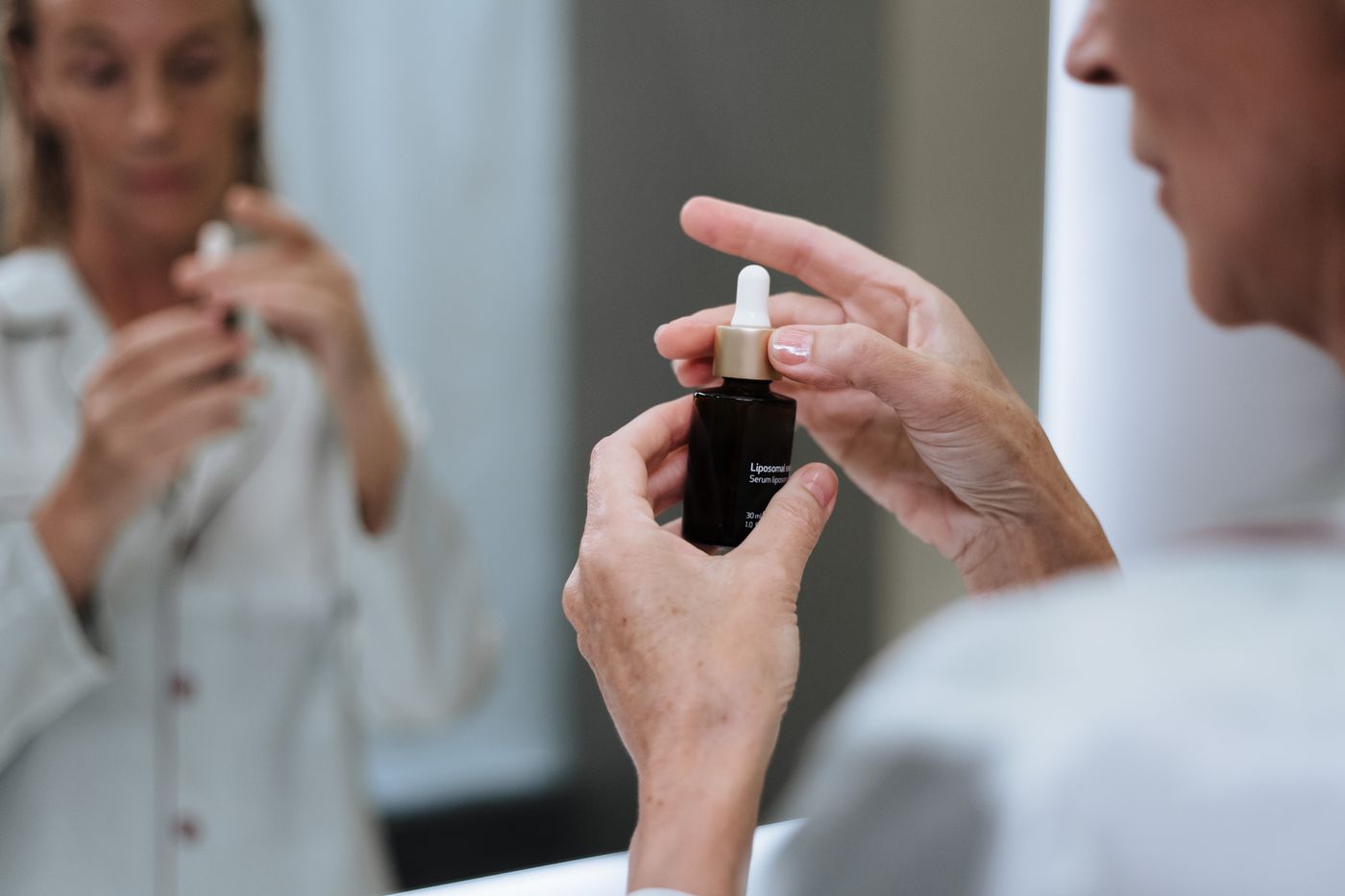
A cream, lotion and oil-based serum may have different finishes and application instructions. Consider whether the product will be used only in the evening, whether it is meant for the face or another area and how it fits with your moisturizer. Read the manufacturer's storage guidance and note the opening date. A small package may be practical when you are trying a product for the first time. A dispenser that is easy to use can be a useful feature, but packaging by itself does not establish the stability or effectiveness of a formula.
Compare products on a fair basis
Create a short list using the declared ingredient, concentration if clearly disclosed, size, directions, price and any relevant precautions. If two products use different compounds, do not rank them simply by their percentages. If a product advertises a blend, check whether the percentage refers to the total blend or the active itself. Use the manufacturer page for the exact variant, and do not assume that an older review describes the current formula. When a company claims a benefit, look for evidence involving the finished product and a relevant outcome rather than relying on a study of an unrelated formulation.
Plan the first few weeks around comfort
Introduce one optional active at a time and follow its instructions. Keep other new exfoliating products out of the initial trial. Maintain suitable moisturizing and adequate sun protection. If irritation is significant or persists, stop the suspect product and seek professional advice. Do not increase frequency solely because an advertised schedule says that you should. A formula that you tolerate is more useful than a stronger product you repeatedly stop using. People with pigmentation concerns should be especially aware that irritation can contribute to additional dark marks.
Decide whether to repurchase before increasing strength
Write down the goal of the purchase and review whether the product was comfortable and practical. The appropriate result and timing depend on the formula and concern, and a commercial product does not guarantee a particular improvement. If the goal is persistent acne or another medical concern, discuss options with a dermatologist. If the product is optional and expensive, consider whether it provides enough value to continue. A successful shopping decision does not necessarily end with a higher percentage or a more expensive bottle; it may end with keeping the routine simple.
| Label detail | Why it matters |
|---|---|
| Retinol vs retinal | Different compounds; do not rank by percentage alone |
| Concentration | Check whether the value refers to a blend or a single ingredient |
| Directions | Intended site, frequency, storage and warnings |
| Prescription treatment | Follow the prescriber rather than a cosmetic guide |
Manufacturer label examples
Examples of published product information, not independent product tests or rankings. Check the current label and price before purchase. Links go to the manufacturers.
The Ordinary Retinol 0.2% in Squalane
Water-free formula with a disclosed retinol percentage. Compare its directions, storage and suitability.
Manufacturer information ↗CeraVe Resurfacing Retinol Serum
Retinol serum marketed for the appearance of post-acne marks; do not assume it has the same concentration as the first example.
Manufacturer information ↗An example of two labels that are not comparable
Imagine a bottle that clearly names retinol and declares its concentration, and another that describes a complex containing several compounds. Even if both display percentages, they are not necessarily describing the same thing. Write down the exact ingredient and directions, check the package size and ask the manufacturer if the claim is unclear. If the product does not fit your circumstances, a lower unit price or bigger advertised number does not make it the better purchase.
Questions readers often ask
Does an ingredient listed as encapsulated mean it will not irritate?
No. The delivery system may be relevant to formulation, but the complete product and individual tolerance matter. Review directions and evidence for that formula. Introduce it cautiously when appropriate, and do not treat a delivery-system claim as a safety guarantee.
Is a retinol percentage equivalent to a prescription strength?
No. Different compounds, formulations and regulatory categories cannot be converted by comparing the numbers alone. A prescribed retinoid should be used according to medical instructions. Do not replace it with an over-the-counter cosmetic without discussing the change with the prescriber.